The damage people blame on gel, dip and acrylic is usually done during removal. Cured gel bonds to the top layer of the nail plate, so a set that gets peeled or picked off does not separate cleanly at that boundary. It takes layers of the plate with it, which is why nails feel thin and bendy afterward. Acetone-based removal softens the product until it releases without force, and if it will not lift under gentle pressure, it needs more time, not more force. If the skin around a nail is broken or bleeding, or the area hurts, that is a question for a doctor before it is a question about polish.
Search for how to take gel off at home and you will find a hundred versions of the same video. Soak, wrap, scrape, done. Almost none of them talk about the step that actually wrecks nails, which is the moment somebody gets impatient and lifts an edge with a thumbnail. The soaking part is boring. The impatience is where the damage lives.
What Peeling Actually Does To The Nail
Cured gel bonds to the top layer of the nail plate. That bond is the entire point of it. It also means product and nail are joined at a boundary you cannot see, so when you pull, the split does not happen where you want it to. It happens a layer or two down, inside your nail.
So the flake that lands on the counter is part product and part you.
Nail plate does not fill back in. Nail plate does not fill back in. It grows out, slowly, and until the thinned section reaches the free edge you are living with what is left. That is the bendy, catches-on-a-sweater stage everybody hates. It is removal damage, and the product that was sitting on the nail did not cause it.
Nothing you can put on a nail is worth the layer of nail underneath it.
A Lifted Corner Is Where It Goes Wrong
It starts innocently. A corner lifts on its own, catches on a coat pocket, and suddenly there is an edge. Nobody sits down planning to destroy ten nails. They plan to tidy up one corner. A while later every nail is bare and there is that sinking feeling.
The lifted corner is doing very little. The picking is what costs you. The lifted corner is doing very little. The picking is what costs you. Leave it alone and have the set taken off by somebody who does this for a living.
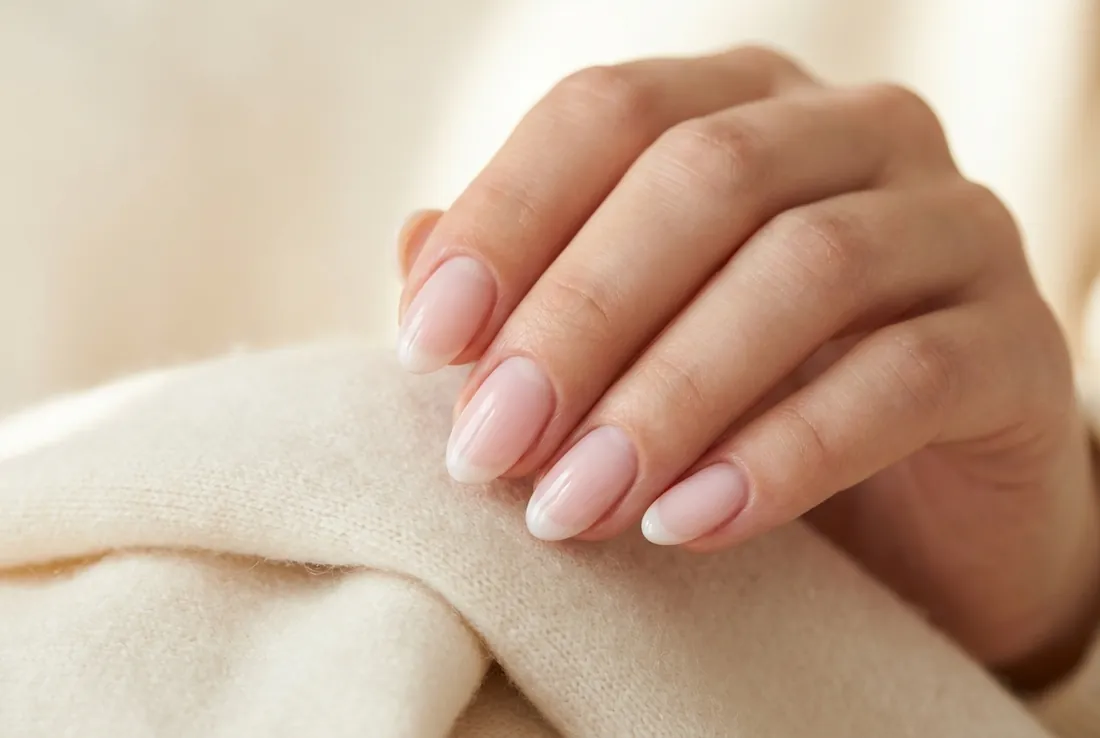
What Acetone Removal Is Doing
Acetone-based removal softens the product so it releases without force. That is the whole mechanism. The chemistry does the work that scraping would otherwise do badly. When it is soft enough, the product gives way under light pressure. When it is not, it fights back, and that is a fight your nail loses.
Here is the part everybody skips. If it does not lift with gentle pressure, it needs more time. That is the rule. Almost every soak-off horror story is really a story about somebody deciding it had been long enough and pushing anyway.
So Can You Do It At Home?
This is where a lot of salon blogs get cute and hand over a numbered list anyway. We are not going to do that. There is no home method we are willing to give you and call safe. We cannot see your nails, and the gap between a clean removal and a stripped one gets decided by judgment calls made with acetone on your fingers.
What we can tell you is what to watch for in yourself. Scraping harder. Bending a nail to test whether it is ready yet. Any moment where the plan quietly becomes apply more pressure so this goes faster is the moment to put everything down and wait. Professional removal exists for exactly this reason.
Does It Matter Whether It Is Gel, Dip Or Acrylic?
For the peeling question, not really. Cured gel bonds to the top layer of the plate, and pulling any hard product off a nail applies force the plate has to absorb. What differs is how each behaves once it starts softening. If you want that comparison laid out properly, we went through how gel, dip powder and acrylic actually differ in its own post.
Product sitting on a nail is inert. Force applied to a nail is where the trouble comes from, and force is always a choice somebody makes.
If You Already Peeled A Set Off
It happens to careful people. The nails you are looking at are thinner than they were. Growth does it. The thinned section moves out toward the free edge over time. If nails stay sore, split or misshapen as they grow, that is worth a doctor's opinion rather than another manicure.
Until then, keep them short. Length gives every knock somewhere to work, and a thinned plate has little to spare. We wrote a longer piece on what nails need after a set comes off, and if what you are seeing is ridges, white marks or splits running down the plate, that post explains what those signs usually mean.
And if a nail is sore, if the skin at the side of it is open, or if there is any bleeding, stop reading beauty blogs and call a physician. That is a medical problem with a medical answer. That is a medical problem with a medical answer.
Where To Find Us
Aloha Beauty Lounge opens Wednesday, October 29, 2026, at 10509 S River Heights Dr #104, South Jordan, UT 84095, an easy drive from Daybreak, Riverton, Herriman, West Jordan, Sandy and Draper. The nail menu starts at $25 for the Tropical Manicure, with the Paradise Luxe Manicure at $35 and the Aloha Glow at $45. Pedicures run from the Aloha Dream at $40 up to the Aloha Paradise at $85, and no-chip gel polish is a $15 add-on. Anything involving an artificial nail is call for pricing, and nail art is priced by length, shape and design. Nail services carry a 10-day guarantee. Read the full service menu, or call (801) 909-8989 and ask.
Frequently Asked Questions
Is it ever okay to peel gel off?
No. Cured gel is bonded to the top layer of the nail plate, so peeling never separates cleanly along that line. It takes plate with it every time, which is why nails come out of a peeled set thin and bendy.
Does gel polish itself damage your nails?
The thinning people blame on gel comes from how the gel came off. A peeled or picked set leaves a thinner plate behind. Removal that softens the product until it lets go under gentle pressure is not pulling layers of plate away with it.
What if the product will not budge?
Then it needs more time. Force is never the answer to a set that is still holding on, because force wins against a nail plate long before it wins against cured product.
How much do you charge to remove gel or acrylic?
There is no published price for nail removal, so please call (801) 909-8989 and ask. What it takes depends on what is on the nail and the condition it is in.
Can I just file the gel off?
There is no version of that we are willing to walk you through. Product and nail plate sit against each other at a boundary that is hard to judge, and a tool does not know where one stops. If a set is not coming off, that is a phone call.
When should I see a doctor about my nails?
If the skin around the nail is broken or bleeding, or if the area hurts, see a physician. Pain and open skin at the nail fold are medical, and no manicure fixes them.