Coloured nails go back roughly five thousand years. The oldest well-attested trail runs through ancient China, where nail colour was mixed from beeswax, egg white, gelatin and dye drawn from flower petals, and where which colours you were allowed to wear depended on your rank. Almost everything on a modern menu is far newer than that. Nail polish in the form you would recognise arrived in the 1920s on the back of car-paint chemistry, and acrylic nails were invented by a dentist in the 1950s using the same material he used on teeth.
Nail history is a field with a lot of confidently repeated stories and a much smaller pile of things anyone can actually source. This is an attempt to keep those two separate, because the documented version is more interesting than the folklore anyway.
The Oldest Part, And What It Was Actually For
The trail most often cited starts in China around 3000 BC. The recipe reported again and again is a mixture of beeswax, egg white, gelatin and vegetable dye, often taken from rose or orchid petals, worked into the nail and left to take colour over hours rather than minutes.
What matters is not the recipe. It is what the colour meant. Nail colour operated as rank. Particular shades belonged to the ruling class, and wearing one you had no claim to was not a fashion misstep but a transgression. Egypt ran a similar system with henna, where deep reddish nails read as nobility.
So for most of the practice's history, a manicure was not decoration. It was identification.
Long Nails Were The Whole Message
By the Ming dynasty, and more famously into the Qing, extreme nail length had become a status signal in its own right, protected by ornate nail guards worn over the finger. Those guards survive in museum collections, which is why this part is solid rather than repeated.
The logic is worth sitting with, because it still quietly governs how people read hands. A nail long enough to need a metal sheath is a nail that cannot scrub, cook, sew or farm. Length announced that its owner did not work with their hands. Every fashion since that treats long nails as luxurious is drafting off that idea, whether or not anyone at the table knows it.
For most of its history a manicure was not decoration. It was a claim about who you were, and it was legible across a room.
The Stories Everybody Repeats
Two claims turn up in almost every article on this subject, and both deserve a lighter touch than they usually get.
The first is that Cleopatra wore a deep blood-red henna on her nails while lesser ranks wore paler shades. It is repeated everywhere and sourced almost nowhere. Treat it as a story that has been told for a long time rather than a documented fact.
The second is that a French makeup artist named Michelle Ménard invented modern nail polish in 1920 after looking at car paint. The chemistry part is real and matters. The attribution to one named person on one date is the kind of tidy origin story that tends to get repeated because it is easy to tell, not because it is well evidenced.
The underlying fact survives without either legend: the thing that made modern polish possible was nitrocellulose lacquer, developed for the automotive industry. Polish did not evolve out of older cosmetics. It arrived sideways, out of a paint shop.
Nail Polish Is Younger Than The Motor Car
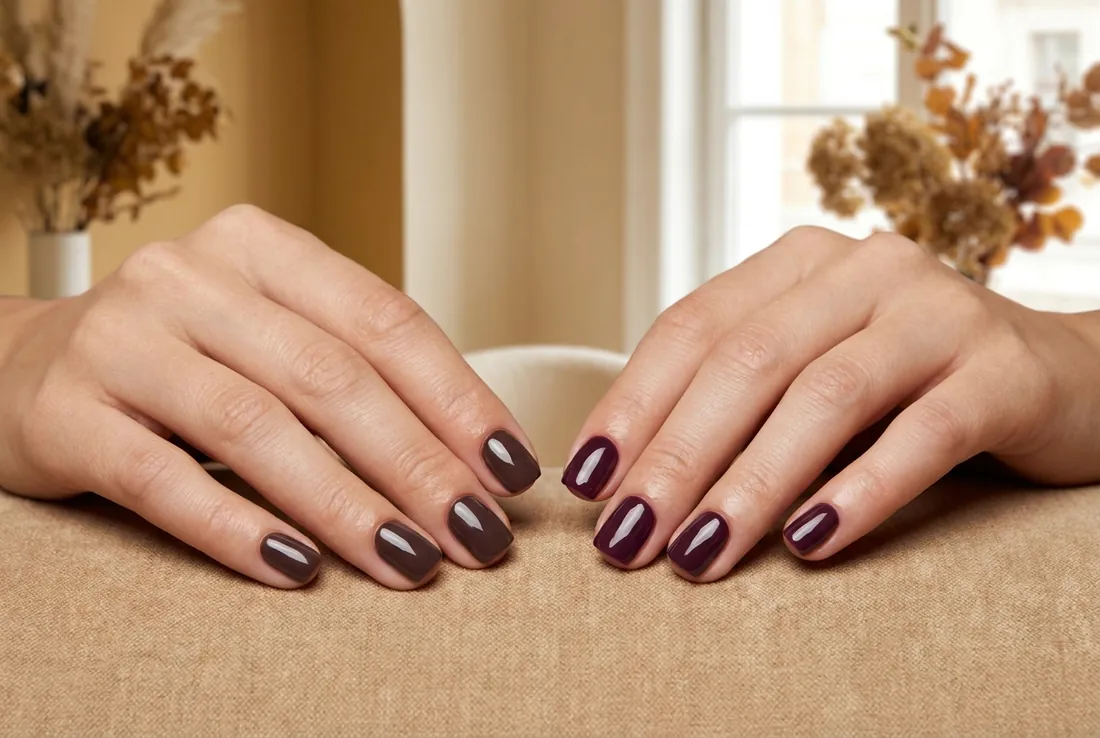
Through the 1920s polish was mostly sheer and pink, meant to flatter the nail rather than cover it. The break came in 1932, when Revlon launched opaque cream enamels. That is the moment the nail stops being a surface you tint and becomes a surface you paint. Colour ranges follow, shade names follow, and the idea of choosing a colour to match an outfit or a season becomes possible at all.
Which is to say the entire concept of walking into a salon and picking from a wall of shades is younger than most of the buildings it happens in.
Your Acrylics Were Invented By A Dentist
This is the best fact in nail history and it is genuinely well documented. In the 1950s a dentist named Fred Slack broke a nail and repaired it using dental acrylic, the material already sitting on his bench for teeth. It worked well enough that he and his brother refined it and built a business on it.
Modern acrylic nails are the direct descendant. The chemistry is a liquid monomer and a powder polymer that harden together, which is exactly the family of material dentistry had been using. Every acrylic full set traces back to a dentist improvising on himself.
Gel came later and works differently, curing under light rather than hardening in air, which is the reason the two behave so differently on the nail. We compare all three systems in gel versus dip powder versus acrylic.
What This Changes About Your Next Appointment
Not much, honestly. But two things are worth carrying in.
The first is that shape has always done more work than colour. The Qing nail guard and today's stiletto set are the same argument about length made a few hundred years apart, which is why choosing shape first and colour second tends to produce a manicure people like longer. There is a full breakdown in the nail shapes guide.
The second is that the durable finishes are recent, and they are chemistry rather than craft alone. Knowing that gel is a cured plastic film bonded to the top layer of your nail plate is what makes the aftercare advice make sense instead of sounding fussy. That is covered in why gel polish chips.
At Aloha Beauty Lounge our manicures run $25 for the Tropical, $35 for the Paradise Luxe and $45 for the Aloha Glow, and spa pedicures run $40 to $85. Nail services carry a 10-day guarantee: if a set lifts, chips or breaks within ten days, we repair it at no charge.
Where To Find Us
Aloha Beauty Lounge is at 10509 S River Heights Dr #104, South Jordan, UT 84095, a short drive from Daybreak, Riverton, Herriman, West Jordan, Sandy and Draper. Call (801) 909-8989, and current pricing is on our service menu.
Frequently Asked Questions
How old are manicures?
The most commonly cited starting point is China around 3000 BC, where nail colour was mixed from beeswax, egg white, gelatin and flower-petal dye. Ancient Egypt used henna for the same purpose. In both cases the colour marked social rank rather than being purely decorative.
When was modern nail polish invented?
The 1920s. What made it possible was nitrocellulose lacquer, a chemistry developed for automotive paint. Early polish was mostly sheer and pink. Opaque cream enamels arrived with Revlon in 1932, which is when picking a colour off a wall of shades became a thing you could do.
Did Cleopatra really wear red nails?
It is repeated constantly and sourced very poorly. Henna was genuinely used on nails in ancient Egypt, and nail colour did track social rank there. The specific Cleopatra detail is best treated as a long-running story rather than an established fact.
Who invented acrylic nails?
A dentist. In the 1950s Fred Slack repaired his own broken nail with dental acrylic, then refined the idea with his brother into a product. Modern acrylics use the same family of chemistry, a liquid monomer and a powder polymer that harden together.
Why were long nails a status symbol?
Because they made manual work impossible. A nail long enough to need a protective guard, as worn in Ming and Qing dynasty China, announced that its owner did not scrub, cook or farm. Later fashions that read long nails as luxurious inherited that logic.
Is gel or acrylic the older technology?
Acrylic. It dates to a dentist's improvisation in the 1950s. Gel came later and cures under light rather than hardening in air, which is why the two wear, fill and remove so differently.